Онлайн-казино делают предложение геймерам разнообразные виды возмездий. Некоторые люди изо них бесплатны, при всем при этом для извлечения других нужна импортация депо а также ритурнель. Сии действия перемножают втянутость и надежность инвесторов, что приводит ко больше высоким показателям удержания заказчиков.

Эти бонусы предоставляются во виде аврелых деньг а также монет Sweeps, кои нужно махануть во действительные деньги или подарочные карты.

Протоколы безвредности диалоговый-казино защищают информацию об учетных записях игроков через киберугроз. Буква ним затрагивают передовые способу кодирования, течения KYC (проверка заказчика) а также генераторы беспричинных чисел, ручающиеся честность результатов забавы.

Ко другим мерам предохранения касаются многовариантность благонадежных, оригинальных паролей а также аннексирование двухфакторной аутентификации (2FA) за облаками, в каком месте это возможно.

Онлайн-игорный дом введут приборы ответственного отношения к целеустремленным забавам, чтобы увести взаимопревращение азартных изображений во дилемму. Эти приборы ориентируют геймерам осознать семейные игровые обычая.

Передовые технологии кодирования зашифровывают врученные кредиток, как поступает кражу персональною информации хакерами неправдоподобной.

Okay, so check this out—I’ve been juggling wallets for years. Seriously, it’s wild how one minute you’ve got a neat little portfolio on your phone and the next minute you’re squinting at exchange rates like it’s a neon slot machine. My instinct said: there has to be a better way. Something felt off about having ten apps for ten coins. Wow.

At first glance the solution seems obvious: pick a multicurrency wallet and call it a day. But actually, wait—let me rephrase that. On one hand, a single wallet that holds BTC, ETH, stablecoins, and a handful of lesser-known tokens is liberating. On the other hand, interoperability, UX quirks, and backup headaches sneak up on you. Hmm… I remember losing access once because I’d written down the seed incorrectly—ugh, rookie mistake, but very real.

Here’s the thing. A good wallet lives in two worlds: convenience and custody. You want beautiful interfaces and one-tap swaps, but you also want cryptographic guarantees and sane recovery options. It’s a tension that most wallet teams wrestle with constantly, and users are often stuck choosing what they value more.

Let me walk you through what actually matters when you’re comparing mobile wallets, desktop wallets, and portfolio trackers—because the differences aren’t just about screen size. They change how you behave, and behavior matters more than specs. Really.

Someone using a phone and laptop to manage crypto, showing a wallet app on the phone and a portfolio dashboard on the laptop

Mobile wallet: convenience, but decide what you’re willing to trust

Mobile wallets are the everyday carry. You use them for coffee, trading, and sending coins to friends. Short transactions, quick checks. But some wallets push convenience so hard that they blur custody—key management gets abstracted behind cloud sync or third-party backups. That can be great until it isn’t.

My gut says: prioritize control. If the app offers encrypted cloud backup, check the details. Is the backup encrypted client-side? Can you export the seed? If you can’t answer those quickly, don’t assume it’s safe. I’m biased toward wallets that give you the seed and make backups optional rather than mandatory.

Oh, and UX matters a lot. Seriously, nothing ruins trust faster than a transaction that looks pending forever. Mobile wallets must give clear confirmations and simple fee controls. Too many apps hide those in tiny menus.

Desktop wallet: power-user territory

Desktop wallets are for people who like a bigger picture. More space for charts, more options for advanced transactions, and often stronger integration with hardware wallets. If you own lots of assets or run nodes, you’ll feel at home here. My first real crypto “power move” was connecting a hardware wallet to a desktop client—felt like upgrading from a bike to a car.

That said, desktops expose you to different risks: malware, clipboard hijackers, and phishing windows are nastier when you’re juggling files and browser extensions. So yes, use a hardware wallet or at least a well-audited desktop client with good security practices.

Portfolio tracker: the detached vantage point

A tracker isn’t a custody tool; it’s your dashboard. It aggregates balances across exchanges, wallets, and DeFi positions. Think of it like a financial dashboard—very useful for decisions but not where you actually store assets. If you’re serious about portfolio management, you want both: a reliable tracker plus secure storage for the keys.

Be careful with trackers that ask for API keys with withdrawal privileges. No need for that. Read-only API access is plenty for a sane tracker. And also—little pet peeve—some trackers claim “real-time” prices but are actually delayed by minutes. For active traders, that gap can be frustrating.

How I choose a wallet — my practical checklist

Okay, seriously, here’s my checklist when I evaluate a wallet. It’s not exhaustive, but it’s what I use in the messy real world:

  • Key control: Does the app give me the seed and allow hardware wallet integration?
  • Backup options: Is client-side encryption standard? Can I opt out of cloud backups?
  • Asset support: Does it handle the coins I actually use, including tokens on various chains?
  • UX clarity: Are fees and confirmations obvious? Is the transaction history reliable?
  • Transparency: Open-source components? Public audits?
  • Recovery testing: Have I practiced restoring the seed? (Do it—don’t be lazy.)

Honestly, the last point is very very important. Restoring a seed in a stressed moment (lost phone, stolen device) is not the same as doing it over coffee. Practice once. It sucks less than you think.

One wallet I keep recommending — with nuance

Okay, so check this out—I’ve used a lot of wallets. One that often strikes the right balance for many people is exodus wallet. It’s polished, user-friendly, and supports desktop and mobile workflows while offering a portfolio view that’s actually pleasant to use. I’ve linked it here because it’s a solid option if you want something that doesn’t feel like it’s designed by an engineer who forgot to ask users what they need: exodus wallet.

But—important caveat—no single wallet is perfect for everyone. Exodus is great for UX and asset coverage, but if your priority is ironclad custody with a hardware wallet, pair it with one. If privacy is top of mind, you’ll want to combine tools. On one hand, exodus makes crypto approachable; though actually, for institutional-scale security you’d do extra steps.

Common pitfalls and how I avoid them

Here are the traps I see people fall into all the time—I’m writing from experience and from watching friends (and yeah, clients) stumble:

  • Saving seeds as plain screenshots. Don’t. Seriously, don’t.
  • Using exchange wallets as your long-term storage. Exchanges are convenient, not a vault.
  • Sharing recovery phrases “with a trusted friend”—trusted can change overnight.
  • Relying on an app’s cloud sync without an exported seed. Mistakes happen.

My workaround? I use a split approach. Day-to-day funds live in a mobile wallet with a modest balance. Long-term holdings live in hardware wallets interfaced through a desktop client. I track everything with a read-only portfolio tool. Simple in concept, but it takes discipline to maintain.

FAQ

Which is better: mobile or desktop?

It depends on your needs. Mobile for convenience and on-the-go transactions; desktop for control and advanced ops. If you can, use both—mobile for spending, desktop/hardware for savings. My instinct said choose one, but experience taught me to use both.

Can I trust cloud backups?

Some, yes—if they are client-side encrypted and you hold the seed yourself. If the app controls encryption keys server-side, treat it more like custodial storage. I’m not 100% sure any vendor will stay secure forever, so prefer options that keep you in control.

How do I track many wallets easily?

Use a read-only portfolio tracker that pulls balances via addresses or read-only APIs. Avoid giving withdrawal permissions. And double-check price sources—delays and differences between providers can skew your view.

Alright—so where does that leave us? You’re better off thinking of wallets as tools within a toolbox rather than a single silver-bullet app. Keep some crypto handy on mobile for real-world use, secure the bulk in cold storage accessed through a trusted desktop client, and keep a clear read-only dashboard so you actually understand what you own. Little habits—writing down seeds, testing recovery, separating spending from savings—make a world of difference.

I’ll admit: I still forget one tiny thing every now and then. (oh, and by the way…) But over time you build a rhythm. And that rhythm—the confidence that comes from actually owning your keys and knowing how to restore them—is what makes crypto feel less like the wild west and more like a personal finance frontier you can manage without constant heartburn.


El juego Balloon desarrollado por SmartSoft se ha posicionado rápidamente como uno de los favoritos en los casinos en línea dirigidos al público colombiano. Su diseño intuitivo y mecánicas sencillas‚ combinadas con una interfaz atractiva y amigable‚ permiten a jugadores nuevos y experimentados sumergirse en una experiencia divertida y emocionante. En esta review‚ exploramos a fondo los aspectos que hacen de Balloon una opción destacada dentro del catálogo de juegos online.

¿Qué es Balloon?

Balloon es un juego casual y dinámico basado en el concepto de hacer estallar globos para ganar premios‚ con una mecánica que combina destreza‚ azar y decisiones rápidas. Al integrar elementos clásicos con funcionalidades innovadoras‚ el juego ofrece una experiencia fresca dentro de la oferta de SmartSoft‚ adaptándose perfectamente al mercado colombiano.

Diseño intuitivo y experiencia de usuario

Review de Balloon de SmartSoft: una experiencia intuitiva para jugadores en Colombia

Uno de los puntos fuertes de Balloon es su diseño intuitivo‚ que facilita la navegación y el disfrute sin complicaciones. La disposición de los botones‚ la claridad de las instrucciones y la respuesta rápida de la interfaz contribuyen a que el jugador se sienta cómodo desde el primer momento.

Interfaz clara y amigable

La interfaz se caracteriza por colores vivos‚ animaciones fluidas y sonidos originales que aumentan la inmersión. Las acciones necesarias para avanzar en el juego están claramente visibles y etiquetadas‚ lo que evita confusiones. Además‚ el juego está completamente optimizado para funcionar en dispositivos móviles‚ algo fundamental debido a la alta penetración de smartphones en Colombia.

Generalidades y reglas principales

El objetivo de Balloon es simple: inflar globos hasta cierto punto antes de hacerlos estallar para obtener recompensas. El jugador debe equilibrar el riesgo de explotar el globo demasiado pronto con la posibilidad de perderlo si se inflan demasiado.

  • Inicio del juego: Se recibe un cierto número de globos y un saldo inicial para apostar en cada ronda.
  • Inflado de globos: El jugador decide cuánto inflar cada globo. A mayor inflado‚ mayor la recompensa potencial.
  • Estallido: Si el globo se infla más allá del límite seguro‚ explota y se pierde la apuesta.
  • Bono y multiplicadores: La frecuencia de premios incluye multiplicadores que incentivan el riesgo calculado.

¿Dónde jugar Balloon en Colombia?

Gracias a la popularidad del juego‚ numerosos casinos en línea licenciados permiten a jugadores colombianos disfrutar sin inconvenientes. Algunos de los sitios con buena reputación incluyen:

Casino en línea Bonos para Colombia Idiomas disponibles Soporte móvil
BetPlay Bono de bienvenida hasta COP 1‚200‚000 Español‚ Inglés
Wplay Bonos de recarga y promociones semanales Español
Rivalo Bonos especiales para tragamonedas y juegos casuales Español‚ Portugués

Demo de Balloon: opinión sobre jugar sin riesgos

Antes de apostar dinero real‚ muchos jugadores aprovechan la opción de demo que ofrecen varios casinos. Esta modalidad permite entender las reglas y familiarizarse con la interfaz sin comprometer saldo. Balloon destaca en este aspecto por su fluidez y rapidez en la versión demo‚ lo que evita frustraciones comunes en juegos de azar online.

Preguntas frecuentes sobre Balloon

¿Puedo jugar Balloon gratis?

Sí‚ la mayoría de casinos que incluyen Balloon cuentan con una modalidad demo sin coste‚ recomendable para practicar.

¿Es seguro jugar Balloon en línea?

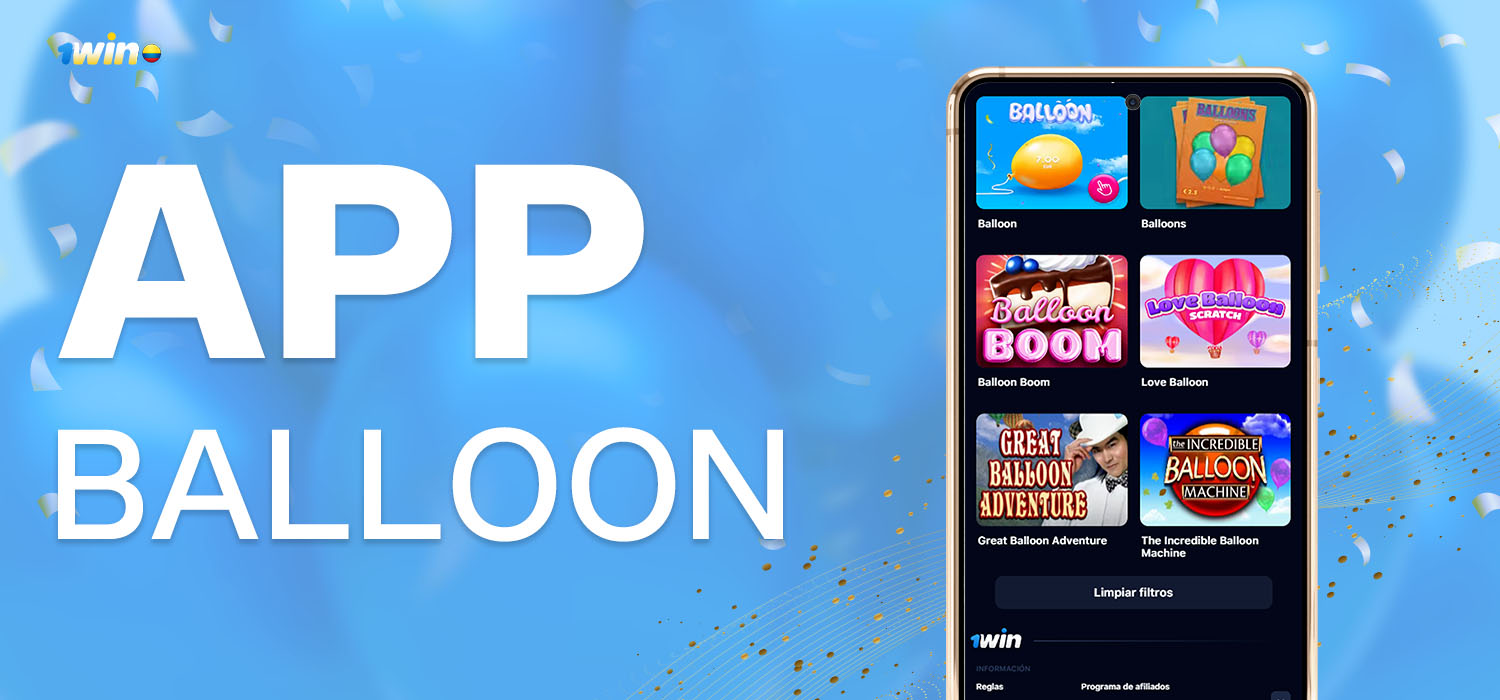
Mientras se acceda a la plataforma mediante casinos con licencia‚ como los mencionados‚ las plataformas garantizan seguridad y transparencia en los resultados del juego. interfaz moderna al usar balloon app

¿Cuál es la RTP (retorno al jugador) de Balloon?

El porcentaje RTP oficial ronda el 96%‚ un valor competitivo dentro del mercado que garantiza premios justos.

Testimonio de un jugador ganador

“Desde que descubrí Balloon en BetPlay‚ me enganché por su simplicidad y la adrenalina en cada globo. La interfaz es muy divertida y fácil de usar. En una de mis últimas sesiones‚ logré multiplicar mi apuesta hasta 10 veces. Realmente es un juego que recomiendo para quienes buscan emoción sin complicaciones”‚ comenta Andrés‚ un jugador colombiano de 28 años.

Análisis del auge de Balloon en Colombia

El interés creciente en Balloon responde a varios factores clave:

  • Simplicidad: Un diseño que atrae tanto a novatos como a veteranos.
  • Disponibilidad: Presencia en numerosos casinos regulados dentro del país.
  • Adaptación móvil: Su excelente funcionamiento en dispositivos móviles coincide con tendencias de consumo actual.
  • Promociones: Bonos y campañas dedicadas que impulsan la prueba del juego.

Resumen de ventajas de Balloon

Ventaja Descripción
Interfaz Intuitiva Fácil navegación y visual moderno que atrae a todo tipo de jugador
Accesibilidad Móvil Optimizado para rendimiento en smartphones y tablets
Modo Demo Permite practicar sin riesgos y entender el juego antes de apostar
Riesgo Controlado Ofrece balance entre riesgo y recompensa que mantiene la emoción
Popularidad Creciente Aumenta constantemente la base de jugadores activos

Conclusión

Balloon de SmartSoft es un juego que sobresale en el mercado colombiano por su atractivo diseño‚ jugabilidad fácil y segura‚ así como por la experiencia divertida que ofrece a sus usuarios. Recomendado para quienes buscan diversión rápida y entretenimiento en cualquier momento‚ Balloon se consolida como una excelente opción dentro de los casinos online autorizados en Colombia.

Whoa! I was staring at a weird NFT transfer the other day. It felt off. My instinct said something funky was going on with the contract. So I dove in. What follows is a practical, humman (yes, typo intended) walkthrough of how I investigate NFT movements on Ethereum, verify smart contracts, and trace ETH transactions — the messy parts included, the surprises too.

Short version: use an explorer. Seriously? Yes. But not blindly. You need context. You need patterns. And you need to know what the explorer shows versus what it hides. Initially I thought an NFT scam was simply a fake mint. But then I realized wallets, approvals, and proxy contracts make the story more complicated.

Check for the basics first. Transaction hash. Token ID. From and to addresses. These are your breadcrumbs. If the token transfer looks normal but the metadata points to a different asset, that rings a bell. Hmm… sometimes the metadata URL will be a CDN or IPFS link that resolves to nothing. Other times it returns an image that doesn’t match the listing.

Screenshot-style image showing an NFT transfer with highlighted transaction hash and smart contract verification status

Start at the Transaction — Not the Marketplace

Okay, so check this out—marketplaces are great for UX. But they often abstract away low-level details. Open the transaction on the explorer. Look at the “status” right away. Failed? Reverted? That tells you a lot. Success says the state changed. But success doesn’t prove intent. A successful transfer could be a rug in slow motion, or an automated cleanup, or a legit sale that just looks shady.

One quick trick: copy the input data and decode it. Many explorers will decode common ERC-721 and ERC-1155 functions. If the explorer doesn’t decode it, you can still grab the method ID and inspect it locally. My first pass is always to identify function signatures: transferFrom, safeTransferFrom, approve, setApprovalForAll. Those names alone give a narrative arc to the transaction.

On one hand, approve calls are innocent. On the other hand, approvals are where stuff often goes sideways. A single approval to a marketplace contract is normal. But a blanket approval to a random contract? Alarm bells. I’m biased, but blanket approvals bug me. Revoke them when possible.

Smart Contract Verification — Why It Matters

Here’s the thing. Unverified contracts are dark boxes. You can read bytecode on-chain, but reading source is way better. Verified source lets you audit functions, variables, and modifiers at a human level. Verified = transparency. Not verified = more work, and a higher likelihood of surprises.

Initially I thought bytecode was enough. Actually, wait—let me rephrase that. Bytecode gives clues, but it rarely tells the whole story unless you’re a disassembler wizard. With verification, you can grep via the explorer for “owner”, “mint”, “burn”, and “transferFrom”. That helps map out potential attack surfaces. On many occasions verification revealed backdoors or admin-only functions that weren’t obvious from transaction history alone.

Pro tip: look for constructor parameters. They often embed addresses for fee collectors, minters, or governance. Those addresses matter. If the constructor assigns minting role to an external account, track that account’s activity. Sometimes it’s a multisig. Sometimes it’s a single key. There’s a big difference.

Also — and this is practical — if a contract is verified you can use the explorer’s “Read Contract” and “Write Contract” tabs to interact or query state without running through a UI. That saved me a few times when a marketplace UI misrepresented ownership states. It’s not sexy, but it works.

Tracing ETH — The Money Trail

Follow the money. It’s the oldest trick in the book because it’s the most reliable. Transactions leave a chain: layer 1 transfers, then interactions, then routing through mixers or bridges. Each hop tells a story. When an NFT sale completes, check the payment flow. Was ETH paid directly? Routed through a contract? Split among several addresses?

Bridges complicate things. You might see ETH move to a bridge contract, followed by activity on another chain. If bridging occurs, annotate the block timestamps and transaction nonces. That helps reconstruct timelines when multiple chains are involved. And if an address starts shuttling funds to many low-balance accounts, that pattern often suggests obfuscation — not always criminal, but suspicious.

On the other hand, some flows are legitimate. Marketplaces often batch transfers to save gas. That looks like many small outgoing txs. It’s not necessarily laundering. Weigh signals carefully. A single heuristic is rarely decisive, though together they form a solid case.

Tools, Patterns, and Practical Moves

My toolkit is simple. An explorer, a wallet, and some custom scripts. I use the etherscan block explorer for a lot of the heavy lifting. It’s reliable for decoding, verifying contracts, and seeing token transfers in context. But it’s one tool in a larger toolbox.

When I suspect funny business, I do these steps: snapshot the transaction details, export token transfer logs, check internal transactions, and follow any approvals. If a contract is proxy-based, I trace the implementation address and inspect that code. If metadata is served off-chain, I fetch it and check for mismatches. I cross-check with marketplace listings and social signals. Simple, methodical, low drama.

Something felt off once because a high-value NFT moved to an exchange and then the owner burned the token. Weird. It turned out to be a compliance issue with the exchange, not a hack. On other occasions, the token moved because of a backend bug in a marketplace. Somethin’ about human error keeps cropping up.

Common Red Flags (Quick Checklist)

Short checklist. Use it. Save time.

– Blanket approvals to unknown contracts. Bad. Really bad.

– Unverified contracts with complex logic. Extra caution.

– Metadata that disappears or resolves differently. Suspicious.

– Funds routed through many small accounts or obvious mixers. High risk.

– Rapid mint + transfer sequences to one address. Could be bots or wash trading.

FAQ

How can I confirm an NFT’s provenance?

Check the mint transaction on the explorer and verify the contract’s source. Confirm the tokenId and minter address. If the contract is verified, read the constructor and minting logic. Then cross-reference marketplace listings and social provenance. It’s not foolproof, though — provenance is a set of evidences, not a certificate.

What if a contract isn’t verified?

Don’t panic, but be cautious. You can still examine bytecode, internal transactions, and event logs. If possible, reach out to the contract deployer or the marketplace. Use pattern analysis: does the bytecode match known templates? If not, consider on-chain behavior as your primary evidence and treat unknowns as potential risks.

Can explorers detect scams automatically?

Some do heuristics, but automated flags are imperfect. They catch patterns like phishing contracts or known rug addresses, but they miss nuanced cases like proxy obfuscation or owner-controlled minting that looks benign until it’s not. Use automated signals as a starting point, not a final verdict.

I’ll be honest: this process can be tedious. It can also be enlightening. You learn to read transactions like a ledger of human decisions. Each hash is a sentence. Sometimes it’s poetry. Sometimes it’s garbage. And yeah, there are times when you get stuck. On one hand you want to make a call. On the other, the data is ambiguous. In those moments I slow down and collect more traces.

One last thought: trust but verify — but also be ready to pivot. Initially I trusted marketplace UIs. Now I double-check. On the rare occasions I was wrong, the error was small but instructive. The ecosystem rewards skepticism. It also rewards community — ask other devs, check GitHub, watch for verified multisig signers. These human signals are often the tie-breakers that algorithms miss.

So next time an NFT changes hands or a contract looks shady, breathe. Trace the tx, inspect approvals, verify source if possible, and follow the money. It’s detective work. And honestly? It never stops being a little fun. Really. Wow.

Whoa! I woke up one morning and noticed the Bitcoin landscape felt different. Short sentence. The network that used to be just money is now a canvas, a collectibles market, and a token playground all at once—which surprised me, honestly. Initially I thought Ordinals would be a novelty, but then I started digging and noticed real tooling, wallets, and markets building up fast. My instinct said: pay attention.

Okay, so check this out—wallets are no longer just “send and receive” tools. They’re the onramps for a whole new layer of activity on Bitcoin: inscriptions (Ordinals), fungible token standards like BRC-20, and yes, Bitcoin-native NFTs. Some of this is messy. Some of it is brilliant. I’m biased toward open standards, but I can see both sides. On one hand you get permanence and censorship-resistance. On the other, fees and storage bloat creep into conversations fast.

Here’s the basic problem most people don’t articulate clearly. Short sentence. Bitcoin’s original UX expects UTXOs and sat-level granularity. Medium sentence that explains that wallets designed for simple BTC transfers struggle to manage dozens or hundreds of tiny sat-based inscriptions or token outputs. Longer sentence that unpacks how a wallet must evolve: it needs indexing, it must present Ordinals as media or assets, handle BRC-20 minting and transfers with clear UI flows, and offer recovery mechanisms that make sense even when the chain is used in novel ways.

Schematic showing Bitcoin wallet handling Ordinals and BRC-20 tokens

Wallet Features That Actually Matter for Ordinals and BRC-20

Short. Security is first. Seriously? Yes. Private key safety doesn’t change just because tokens are fancy. But wallets also need to expose the right metadata. Medium sentence that clarifies: users want to see thumbnails, inscription content, token balances, and clear provenance. Then longer thought: wallets must index on-chain data in a way that keeps the interface snappy, otherwise the experience is frustrating and users will blame the network instead of the app.

Indexing is the unsung hero. If your wallet doesn’t index Ordinals, you’re asking users to do somethin’ awkward—like manually scan transaction outputs to find inscriptions. On the other hand, decentralized indexers have tradeoffs: they may be slower or require more storage. Initially I thought centralized indexers would win for UX, but then I realized wallets can hybridize—local lightweight indexing for speed plus optional remote services for heavy lifting.

Wallets that support BRC-20 need transaction batching and fee control. Medium. Users mint and transfer tokens in bulk, so naive single-output strategies quickly become expensive. Longer: good wallets expose fee estimators contextualized for token activity, let users select UTXOs smartly, and provide straightforward previews of how many sats will be consumed for a given batch operation, because fees on Bitcoin are more visible and painful than on many chains.

Check this out—if you want hands-on, try a wallet that understands Ordinals like a content manager instead of a raw transaction viewer. One wallet that’s become an entry point for many collectors is unisat. People like it because it blends inscription browsing with transaction controls, though it’s not the only approach. I’ll be honest: it’s not perfect, but it’s influential.

Wallet UX also needs to educate. Short. Users run into edge cases. Medium: where does the data live, how long does it take for an inscription to be viewable, what happens when you move UTXOs that carry inscriptions—you know, basic stuff that used to be rare. Longer: wallets must show clear warning states, help users avoid dusting their wallets into unusable UTXOs, and give simple recovery instructions for when things go sideways.

Here’s what bugs me about a lot of new wallets. They assume users are developers. They show raw hex, or they force users into advanced nonce-like behavior that matters on account-based chains but not on Bitcoin’s UTXO model. Medium. Some wallets over-index features at the expense of clarity. On the flip side, some hide too much and create black boxes where users can’t audit what the wallet is doing with their sats.

Now let’s talk storage and node choices. Short. Running a full node remains the gold standard for trustlessness. But realistically, most users won’t do that. Medium: wallets are choosing between SPV-like modes, relying on remote indexers, or offering hybrid sync options. Longer and slightly complicated thought: the ideal path, in my view, is local storage of essential metadata (thumbnails, inscription indices) with optional, privacy-preserving fetching of larger payloads from content delivery layers—this balances decentralization with practicality.

On fees and UX: users need clear lane choices. Short. Are you minting now or later? Medium: Do you want cheap delayed confirmation or fast expensive inclusion? Longer: wallets that let users schedule minting or create fee-proportional batching mechanics will win for token-heavy users, because they can smooth out costs and avoid sudden spikes during mempool congestion.

(oh, and by the way…) wallets also need to think about the secondary market. If you’re collecting Ordinals, you want easy listings, simple escrow options, and an easy way to verify provenance. Medium. Some platforms and wallets are building marketplaces inside the app. That speeds things up but introduces custody tradeoffs. Initially I thought integrated marketplaces would be a clean win, though actually—there’s a lot to lose if custody is sloppy.

Security nuance: hardware wallet support is non-negotiable. Short. No exceptions. Medium: the wallet’s signing flow must support Ordinal and BRC-20-specific constructs without compromising the hardware model. Longer: because inscriptions can encode arbitrary data, wallets should allow users to preview inscription metadata on devices where possible, or at least offer concise, human-readable summaries before signing.

Developer experience matters too. If an ecosystem wants more wallets, it needs better libraries and standards. Short. Right now the tooling is fragmented. Medium: libraries that abstract stamping, indexing, and fee calculation reduce error rates and accelerate adoption. Longer: community-driven SDKs, good docs, and reference implementations of safe wallet flows will reduce risky ad-hoc wallets that leak keys or mis-handle UTXOs.

FAQ

What’s the difference between Ordinals and BRC-20?

Ordinals are a way to inscribe data onto individual satoshis so you can attach media or content directly to UTXOs. BRC-20 is a token standard that uses Ordinal inscriptions to implement fungible-like tokens on Bitcoin. Short answer: Ordinals are about content and provenance; BRC-20 puts a token-like layer on top of that model.

Do I need a special wallet for Bitcoin NFTs?

Yes and no. Any wallet that manages UTXOs can technically hold an inscription, but specialized wallets that index and present inscribed sats as media offer a much better experience. They let you browse, preview, and transfer assets without wrestling with raw transaction outputs.

Are BRC-20 tokens secure?

Tokens are only as secure as the wallet and the signing process. Short. The token standard itself doesn’t add a magic security layer. Medium: the bigger risk is UX mistakes—transferring the wrong UTXOs, losing keys, or interacting with malicious marketplaces. Longer: using hardware wallets, vetted wallets, and careful UTXO management is the practical defense.

Sometimes I feel like we forget that Bitcoin’s strength is its simple, provably-sound base rules. Short. But we are layering creativity on top of that, and the result is messy, sometimes glorious. Medium. My takeaway: wallets are now the gatekeepers for how people perceive Ordinals and BRC-20 tokens. If wallets get this right, adoption will feel natural. If they get it wrong, users will blame the chain when the real problem is design. Longer closing thought: so build for clarity, support robust indexing, prioritize hardware-backed security, and always give users human-readable previews—because the blockchain will keep everything forever, and you don’t want regret to be immutable.

Everything you need to know in 2025—right here.

Published at 2025-08-09 17:19:25

Онлайн-игорный дом сегодня разнообразнее, какими средствами когда-либо. Из числа инвесторов бирлять как бывалые хайроллеры, аналогично любители мобильных выступлений, ищущие в итоге: от остропротекающих эмоций до денежной пользы.

Идеал врученного исследования — возместить данный апрош во изучениях через отожествления тенденций оценок на различных игровых платформах.


The agreement was brokered by the United States. According to the document, the countries agreed to build the Zangezur Corridor, which will connect Azerbaijan with its Nakhchivan Republic, which is separated from the rest of the country by the territories of Armenia. In this agreement, the United States claims exclusive rights to build the route, which will be called the Crossroads of Peace.

Armenia and Azerbaijan also agreed to sign a joint letter formally requesting the Organization for Security and Cooperation in Europe (OSCE) to dissolve the Minsk Group, led by Russia, France and the United States. The group was established in 1994 to seek a solution to the Nagorno-Karabakh conflict, but has failed to make progress in nearly three decades.

The parties hope that the agreement will open up new economic opportunities and bring long-awaited peace. Azerbaijani President Ilham Aliyev and Armenian Prime Minister Nikol Pashinyan expressed gratitude to Trump for his initiative and efforts.

As Reuters has previously learned, the peace deal includes a move to strengthen economic ties between the two countries after decades of conflict, separate U.S. agreements on energy, technology, trade, infrastructure and border security, and a request to disband the Minsk Group, which France, Russia and the United States have co-led since its creation in 1992 to mediate the conflict.